Who Was Paul? From Persecutor to Apostle

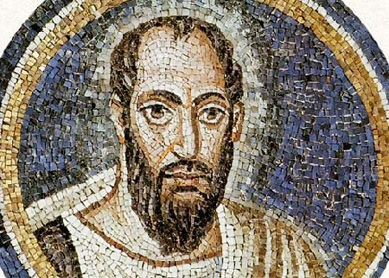
Suggested reading: Acts 9; Galatians 1:11–24; Philippians 3:4–11
The man who wrote Romans once spent his days trying to destroy the church. That is not a footnote to Paul's story. It is the heart of it, and it explains why he wrote about grace the way he did.
A man of two worlds
Paul was born in Tarsus, a busy university city in what is now southern Turkey (Acts 22:3). His Hebrew name was Saul, after Israel's first king, who also came from the tribe of Benjamin. He was also born a Roman citizen, a rare privilege for a Jew in that day (Acts 22:28).
That background made him unusually fit for his calling. He was fluent in the Jewish Scriptures and at home in the Greek-speaking world. He could argue in a synagogue on Saturday and in a marketplace on Monday.
The zealous Pharisee
Paul trained in Jerusalem under Gamaliel, one of the most respected rabbis of the age (Acts 22:3). He described himself as a Pharisee, blameless in keeping the law, and zealous enough to persecute the church (Philippians 3:5–6).
When Stephen became the first Christian martyr, the men who stoned him laid their coats at Saul's feet (Acts 7:58). Soon he was going house to house, dragging believers off to prison (Acts 8:3). He believed he was serving God.
The road to Damascus
Then, on the road to Damascus, the risen Jesus met him in a blinding light and asked, "Saul, Saul, why are you persecuting me?" (Acts 9:4). Paul's whole world turned over. The crucified carpenter he had opposed was Lord of all.
After his conversion, Paul spent time in Arabia and Damascus before returning to Jerusalem (Galatians 1:17–18). Later, Barnabas brought him to Antioch, where believers were first called Christians (Acts 11:25–26). From there Paul launched three missionary journeys across modern-day Turkey and Greece, planting churches in city after city.
A tentmaker with a mission
Paul often supported himself by making tents so he would not be a burden to new believers (Acts 18:3). He was beaten, stoned, shipwrecked and imprisoned for the gospel (2 Corinthians 11:23–28). He kept going because he believed he owed the good news to everyone (Romans 1:14).
He eventually reached Rome, not as a free traveler but as a prisoner awaiting trial before Caesar (Acts 28). Early church tradition holds that he was executed there under Emperor Nero in the mid-60s AD.
Why this matters for Romans
When Paul writes that all have sinned (Romans 3:23), he is not pointing fingers. He counted himself the worst of sinners (1 Timothy 1:15). When he writes that God shows his love in that Christ died for us while we were still sinners (Romans 5:8), he is describing his own story.
Romans is not abstract theology from a distant scholar. It is the testimony of a man who was utterly undeserving and utterly transformed. As we work through Romans together, remember who is writing: a former enemy of Jesus, now his devoted servant.
Join us Sunday at Harvest Community Church as we continue our journey through Romans.


Comments